Key takeaways
- Shortlet compliance in Lagos depends on property-use clarity, guest identity, access control, and clean revenue records.
- Operators should treat taxes, estate rules, and safety procedures as part of one operating system, not isolated tasks.
- A booking should not move to access until guest identity and payment state are properly captured.
- The more units you manage, the more compliance needs to be built into workflow rather than memory.
Table of contents
- 1. Overview
- 2. Start with the right compliance mindset
- 3. Check property use before you market the unit
- 4. Understand the tax layers that matter
- 5. Build a guest screening standard
- 6. Make access control part of compliance
- 7. Treat safety as a compliance requirement, not a marketing claim
- 8. Use distribution controls so bookings stay clean
- 9. Keep a documentation file for every unit
- 10. A practical 2026 compliance checklist
- 11. The main point for Lagos operators
Article overview
Primary keyword
Lagos shortlet regulations
Category
Guides
Location focus
Nigeria, Lagos, Lekki
Commercial guide
Compare the operating system behind this guidance.
If you are evaluating software for a Nigerian hotel, review the evergreen Staycore buyer page for PMS, payments, rooms, POS, staff controls, and reporting.
Hotel Software NigeriaWritten by
Kingsley Uzondu
Growth & Alliances Lead
Focuses on growth strategy, partnerships, direct demand, and commercial positioning for hotels, shortlets, and hospitality groups using Staycore.
Editorial standards
Staycore insights are written for operators, reviewed for practical accuracy, and structured for search and AI retrieval.
View standardsOverview
If you run shortlets in Lagos, compliance is not a side task. It is part of the operating model. The more your portfolio grows, the more the risk moves from a single bad guest to a broader exposure across taxation, building rules, estate restrictions, safety expectations, and guest documentation.
Many operators still treat compliance as something to clean up only when a landlord complains, an estate manager raises an issue, or a guest incident becomes public. That approach is expensive. In Lagos, shortlet operators are better off assuming that every unit needs a record, every booking needs a trace, and every guest stay should be supportable if anyone asks questions later.
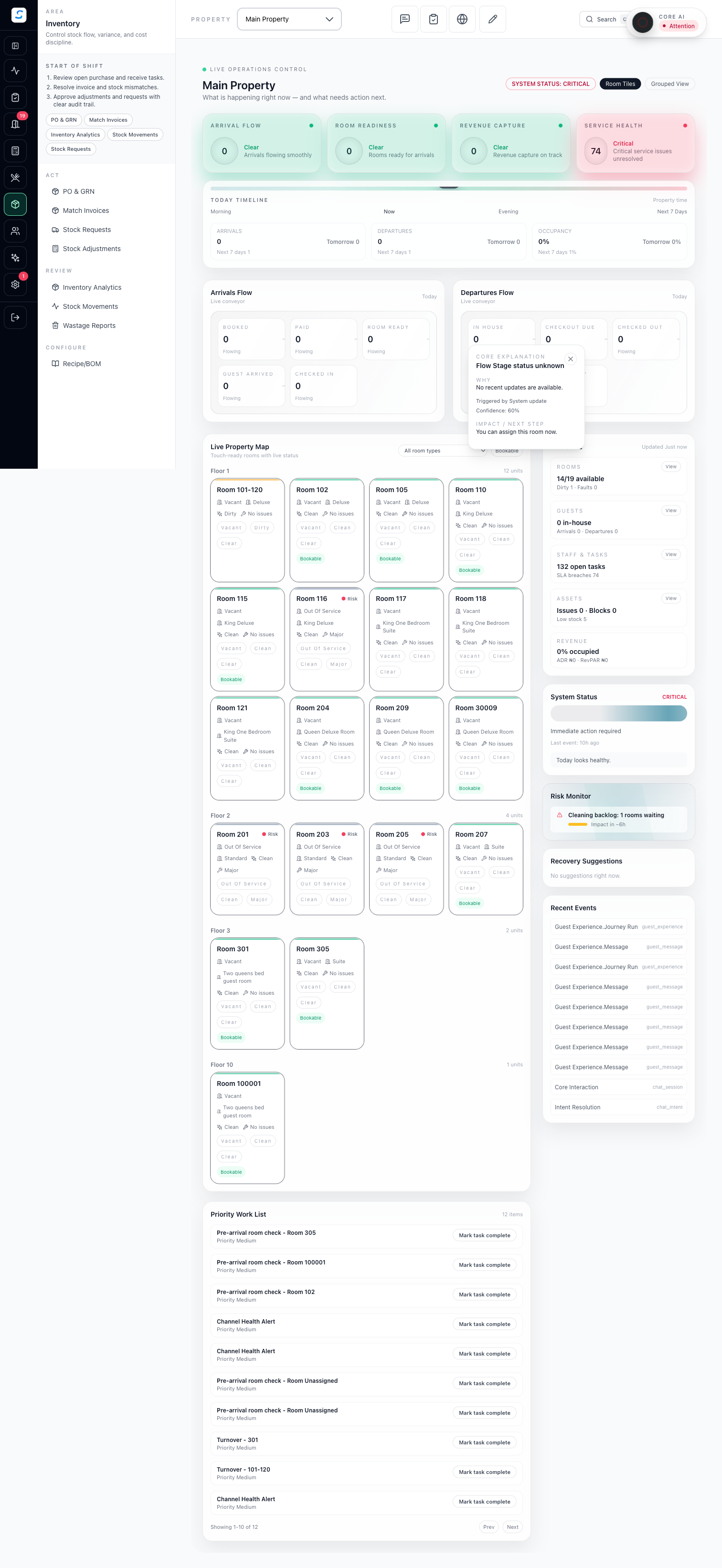
This guide is written for operators who want to build a shortlet business that can survive closer scrutiny in 2026. It does not pretend that one page can replace legal advice. Instead, it gives you the operating logic: what to check, what to document, what to automate, and where Staycore can help you reduce manual risk with systems like Commerce and Reservations, Check-in Identity, Smart Access, and Operations Governance.
Start with the right compliance mindset
The first mistake many Lagos shortlet operators make is thinking that compliance only means paying tax. Tax matters, but it is only one layer. The business also needs to manage property use, guest safety, payment records, channel records, and the terms under which the unit is occupied.
For a shortlet business, compliance should be treated as a chain:
- Is the property legally usable for short-term accommodation?
- Are the estate or landlord rules clear enough to avoid conflict?
- Are guest checks and access controls in place?
- Are payments and receipts recorded properly?
- Are taxes and charges tracked consistently?
- Can you prove who stayed, when they stayed, and under what terms?
If any one of those links is weak, the whole operation becomes fragile. That fragility is what eventually shows up as disputes, losses, or shutdown pressure.
The right way to run a Lagos shortlet is to make compliance visible in the workflow instead of hidden in someone’s head. If a booking is accepted, the required guest details should be collected. If access is granted, the record should show who approved it. If payments are received, the revenue trail should not disappear into WhatsApp chats or a notebook.
That is the real difference between an informal side business and a professional hospitality operation.
Check property use before you market the unit
Before you launch a shortlet, confirm that the property can actually be used the way you intend. This sounds obvious, but a lot of operators list units first and ask questions later.
There are three layers to consider.
First, the building itself. If you are converting a residential unit into short-term accommodation, check the relevant planning and building control requirements. Lagos State has formal planning and building control frameworks, and property use should not be assumed just because the building exists. If the unit was never meant for hospitality-style turnover, you need to understand the implications before you sell nights to guests.
Second, the landlord or title arrangement. If you are not the owner, the lease or management agreement should clearly state whether short-let use is allowed. A verbal agreement is not enough. If there is a dispute later, what matters is what you can prove.
Third, estate or community rules. Many Lagos shortlets sit inside estates with their own expectations around security, parking, visitor access, and noise. An operator may think the unit is approved because the landlord is relaxed, only to discover that the estate manager is not. That gap creates avoidable friction.
The most practical approach is to document the right to operate the unit as short-term accommodation before you spend heavily on furnishing, photos, and distribution. It is cheaper to verify use than to explain a shutdown after the fact.
Understand the tax layers that matter
Shortlet tax conversations often get reduced to one question: “Do I pay VAT?” That is too narrow. A better question is: “What taxes, fees, and filings apply to this short-let income stream, and how do I keep the records clean?”
For most Lagos operators, the tax picture can involve a mix of federal and state obligations, depending on the business structure and activity. The main thing is not to guess. Work with a qualified tax professional to map your position for income tax, VAT where applicable, and any state or local charges that apply to your operating setup.
What operators should do in practice is this:
- Keep a separate business record for each property or portfolio.
- Record gross booking value, platform fees, cleaning income, service charges, and refunds separately.
- Track occupancy by unit and by month so revenue can be explained later.
- Keep invoices, receipts, and bank statements matched to the underlying booking.
- Avoid mixing personal expenses with property income.
The reason this matters is simple. If your records are messy, you do not just create tax risk. You also destroy margin visibility. You cannot know what each unit really earns if you cannot separate revenue from cleaning, utilities, platform fees, discounts, and damages.
This is one area where Revenue Intelligence becomes valuable. You want a live view of how much each property earns, what is being discounted, where revenue is leaking, and whether your pricing strategy is actually supporting profit after costs.
Build a guest screening standard
Guest screening is not about being suspicious of every person. It is about knowing who has physical access to your property and ensuring the stay is consistent with your business rules.
For Lagos shortlets, screening should be standard because the property is usually more exposed than a hotel. A hotel has trained front office staff, CCTV, and controlled circulation. A shortlet often relies on a host, an assistant, or a remote manager. That makes the information trail more important.
At minimum, operators should define:
- What guest identity information is required before check-in.
- Whether the booking name must match the person arriving.
- Whether local or foreign guests follow different screening steps.
- What documents are required for corporate, family, or event stays.
- What to do if there is a mismatch between booking details and the arriving party.
If you manage multiple apartments, this process should be consistent across all units. You do not want one cleaner or host improvising while another team follows a stricter process.
Use Check-in Identity to standardize the capture of guest records and reduce the kind of weak handoffs that make it hard to know who was actually on site. Pair that with Guest Experience so the guest gets a clear, professional process instead of a confusing list of requirements sent too late.
The operational rule is simple: if access is going to a physical unit, the identity process should happen before the key or lock code is shared.
Make access control part of compliance
Shortlet compliance is not only paperwork. It is also physical control. In Lagos, one of the fastest ways to lose discipline in a shortlet business is through uncontrolled keys, shared codes, or staff who can open units without traceability.
If a guest has access to a unit, you should be able to answer three questions:
- Who authorized the access?
- When did access begin and end?
- Can the code, key, or device be disabled quickly after checkout?
That is why access control should be part of the compliance structure, not a separate gadget decision. If you use Locks, make sure they are tied to booking state and check-out timing. If you still use physical keys, introduce a sign-out process with strict handover rules.
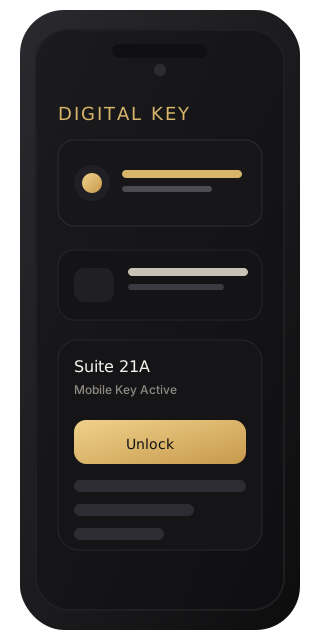
Smart Access matters because it reduces the chance that one old code, one copied key, or one informal handoff becomes a recurring liability. In a market where guests value convenience but owners need control, access must be both easy and auditable.
It also helps to connect access with housekeeping and maintenance status. A unit should not be accessible if it is not ready, and it should not remain open after a stay has ended. That one discipline alone prevents a surprising number of disputes.
Treat safety as a compliance requirement, not a marketing claim
Safety language is common in listings, but real safety is operational. If you are operating in Lagos, you need more than vague assurances. You need visible controls.
Think in terms of:
- Functional fire safety equipment.
- Clear emergency contacts.
- Reliable water and power backup plans.
- Maintenance logs for critical equipment.
- Clear procedures for incident escalation.
- Security arrangements that fit the location and guest profile.
Do not wait for an incident to think about these items. In shortlet operations, safety is part of the guest promise and part of the legal exposure. If the unit has a defect, it should be recorded and addressed. If a guest reports a problem, the response should be traceable.
Your team should also know what not to improvise. If there is a maintenance fault, a guest complaint, or a security concern, someone must be assigned responsibility and a timeline. This is exactly where Operations Governance becomes useful, because it gives you structure around approvals, tasks, incidents, and accountability.
Use distribution controls so bookings stay clean
One compliance problem that operators overlook is distribution drift. When the same unit is listed across several channels without clear controls, you can end up with double bookings, inconsistent guest terms, or forgotten restrictions.
Shortlet compliance should include the distribution layer because every channel is a source of operational truth. If one channel says the unit allows four guests and another says six, or one platform shows a cancellation rule that your team does not honor, the guest will hold you to the promise they saw.
This is why Channel Management for Shortlets is not just a revenue topic. It is also a compliance topic. The listing needs to match the operational reality. If you change rates, minimum stays, check-in rules, or availability, every channel should reflect it.
Use Commerce and Reservations to keep the booking record, availability, and payment state aligned. Once the reservation is structured properly, the rest of the workflow becomes easier to defend.
Keep a documentation file for every unit
If your shortlet portfolio is more than one unit, every property should have its own compliance file. That file does not need to be complicated, but it should be complete.
At minimum, keep:
- Ownership or lease proof.
- Evidence of permission to operate as short-term accommodation.
- Estate or community operating rules.
- Utility and service account records.
- Guest screening and access policy.
- Housekeeping and maintenance logs.
- Tax and revenue records.
When something goes wrong, the property file is your defense. When a partner or landlord asks for a report, the file is your credibility. When you want to expand into a second or third unit, the file is your playbook.
This is also where Staycore is stronger than a notebook and a WhatsApp thread. If your operation runs through software, it is easier to trace what happened and why. If you want to see what that structure looks like before buying, review Staycore Pricing or Book a Staycore Demo. If you are ready to start standardizing from the beginning, you can also Start a Staycore Account.
A practical 2026 compliance checklist
Use this as a working standard before you take a new Lagos shortlet live:
- Confirm the unit is permitted for the intended use.
- Review landlord, lease, and estate conditions.
- Register the business and set up tax records properly.
- Create a guest identity and access policy.
- Tie access to reservation status.
- Keep receipts, invoices, and booking histories together.
- Train staff on incident handling and escalation.
- Review rate and distribution rules monthly.
- Keep maintenance and safety logs for each property.
- Audit every unit at least once per quarter.
That list is not fancy, but it is the difference between a portfolio that scales and one that gets noisy, inconsistent, and hard to defend.
The main point for Lagos operators
The Lagos shortlet market still has room for disciplined operators. The winners will not be the ones with the most units alone. They will be the ones who can prove control, keep guests happy, and protect revenue without adding chaos.
Compliance is not a tax-only conversation. It is a business quality conversation. When your use rights are clear, your guest screening is structured, your access is controlled, and your records are clean, the operation becomes easier to grow.
If you want to manage that process with less manual work, build around the systems that support it: Commerce and Reservations, Check-in Identity, Smart Access, Guest Experience, and Operations Governance. For broader portfolio strategy, also read The Modern Shortlet Management Guide for Nigeria and Channel Manager for Shortlets: 2026 Guide to Maximizing Occupancy.
The practical takeaway is straightforward: if you cannot explain your shortlet operation in records, you are operating on risk, not control.
FAQ
Frequently asked questions
Do Lagos shortlets need a formal compliance process?
Is tax the only compliance issue for shortlets?
Why does access control matter so much?
How can Staycore help?
Next step
See shortlet control workflows
Use Staycore to standardize guest records, access, tasking, and approvals across Lagos shortlet units.
Series navigation
Nigeria Market Intelligence
Location-aware, search-ready editorial for Lagos, Abuja, and broader Nigeria hospitality demand, operating standards, terminology, and guest expectations.