Key takeaways
- A good demo should show real workflows, not marketing screenshots.
- You should judge the system by how it handles your daily handoffs and exceptions.
- The best demo is one that includes reservations, room status, billing, and reporting in one story.
- The demo should make it obvious how the software reduces friction for both staff and management.
Table of contents
Article overview
Primary keyword
Staycore PMS demo
Category
Press
Location focus
Nigeria, Lagos, Abuja
Written by
Emmanuel Omobude
CEO
Leads Staycore with a focus on revenue control, operating discipline, and modern hospitality systems for Nigerian properties.
Editorial standards
Staycore insights are written for operators, reviewed for practical accuracy, and structured for search and AI retrieval.
View standardsWhat a serious PMS demo should prove
A demo is not a formality. It is the moment you find out whether the product can actually support your operation. The wrong demo is a slideshow with a login screen at the end. The right demo shows the workflows your team already lives with, then removes the friction that slows them down.
For Nigerian hotels, that usually means the front desk, housekeeping, billing, payment posting, and manager visibility all need to work together in real time. If the product looks polished but collapses the moment you ask about room moves, refunds, or outlet posting, the fit is weak.
What the Staycore demo should show you
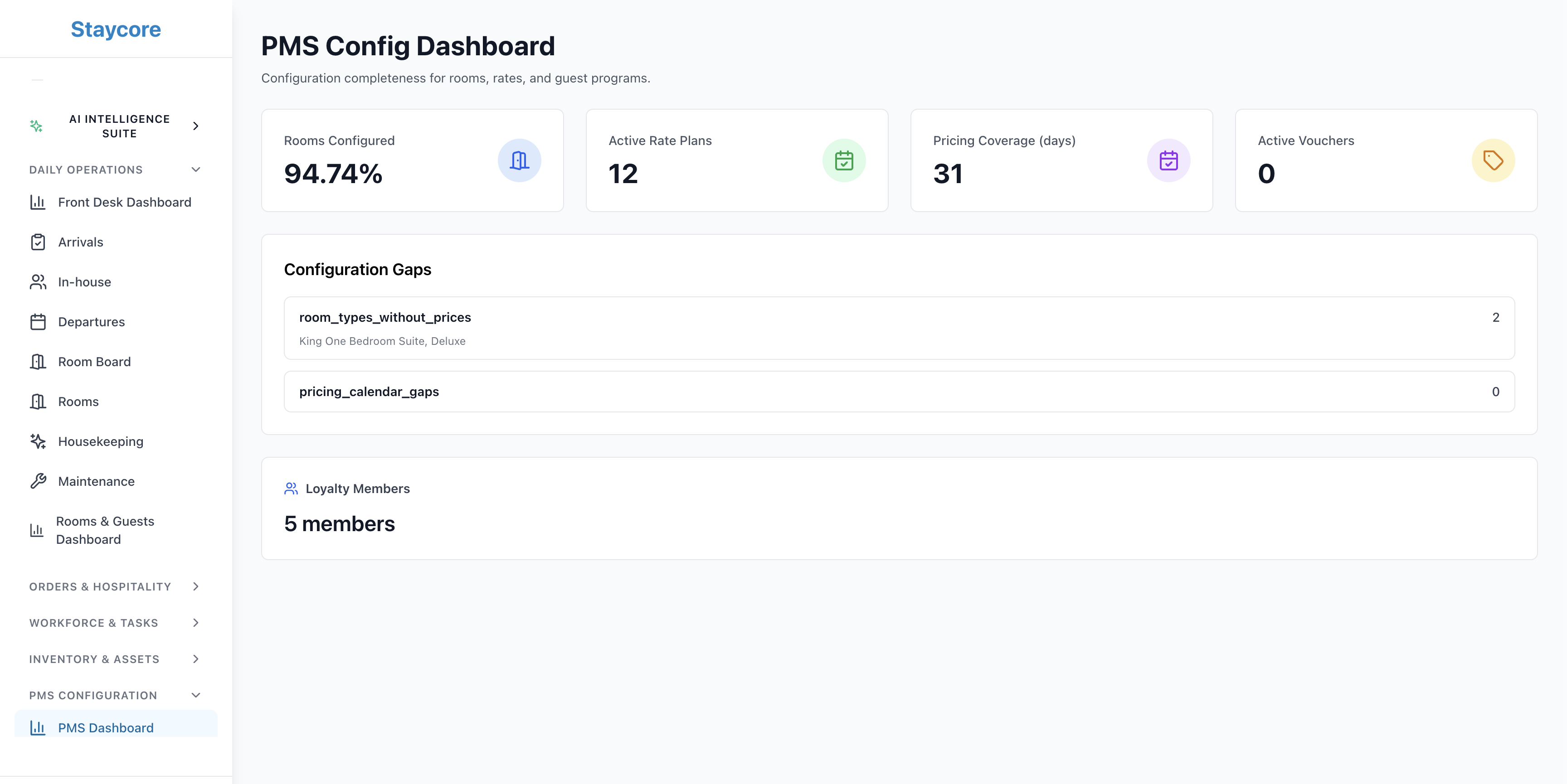
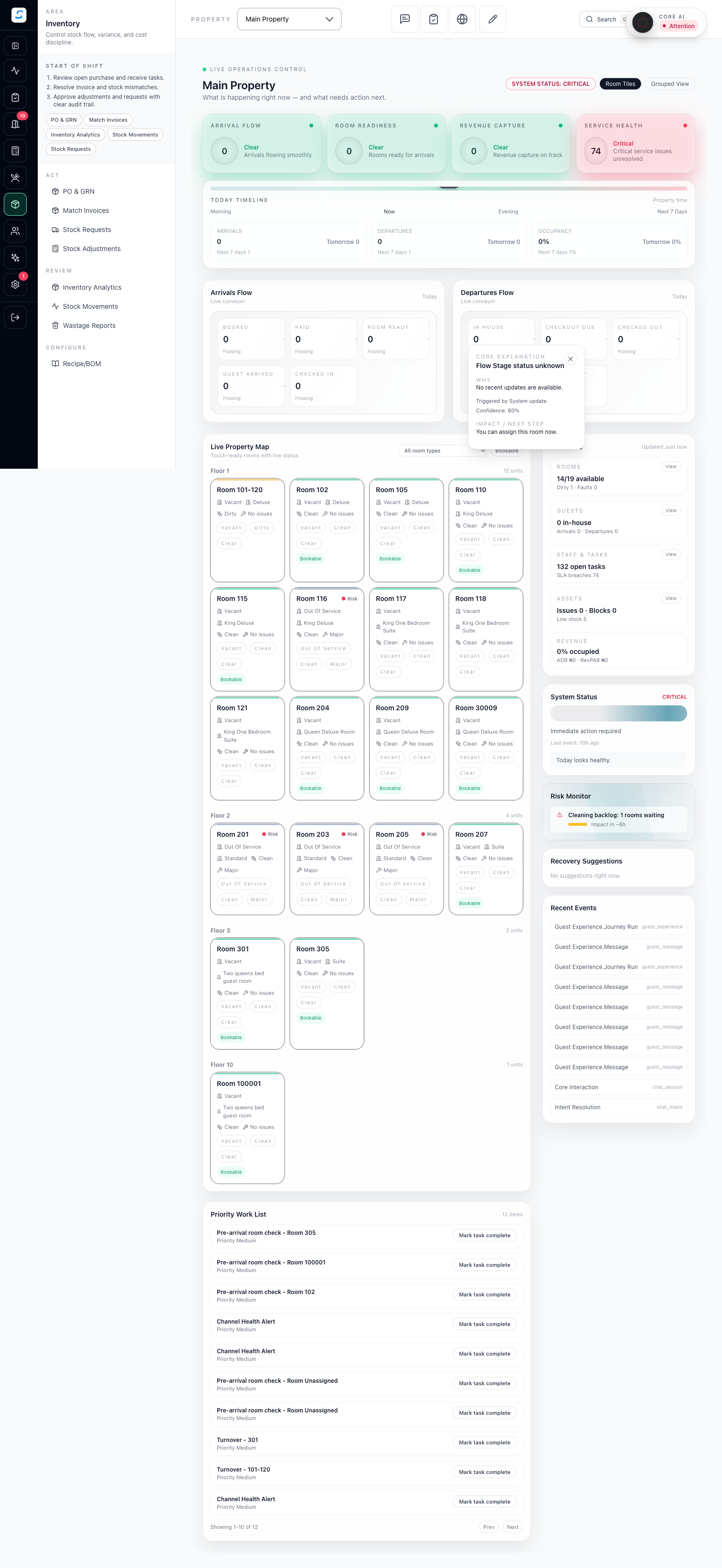
The Staycore demo is designed to make the operating model obvious. You should see how arrivals move through the front desk, how room status updates to housekeeping, how payments are reflected, and how management gets a clean summary without chasing staff for updates.
- Front desk check-in and check-out flows.
- Room board and housekeeping status changes.
- Payments, folios, and approved corrections.
- Inventory and outlet visibility where applicable.
- Reporting that helps management see trends, not just totals.
The walkthrough should also make Staycore’s leakage-prevention model explicit. Staycore is a vertically integrated cloud platform that covers concierge, F&B and restaurant operations, inventory, recipe and BOM control, and access control in the same operating layer. Access control is not bolted on as a separate system. It is native to the product.
That means the demo should show room access responding directly to booking and payment state. If a room has not been paid for, the door should not open. If a guest extends a stay but the extension is not captured in the system, access should expire automatically. If an early check-in is granted but never recorded, access should not be permitted. In practice, that tight coupling removes one of the most common leakage gaps in hotels and shortlet properties because no access or service should exist outside what the system has properly captured and accounted for.
If you want to understand the business value behind the demo, pair this article with Hotel Management Software in Nigeria and Cloud vs. On-Premise PMS.
Who should attend, and what they should bring
The strongest demo conversations happen when the people who live the workflows are present. Owners care about control and profitability. General managers care about adoption and discipline. Front office teams care about speed and clarity. Finance cares about auditability and clean handoffs. That mix matters.
- Bring the room categories, outlet structure, or unit structure you actually run.
- Bring a list of current pain points, not just feature requests.
- Bring your channel mix: direct, OTA, corporate, walk-in, or shortlet.
- Bring your questions about onboarding, support, permissions, and reporting.
If your operation is still spread across paper, spreadsheets, WhatsApp, and an aging POS, the demo should show how much of that can disappear into one system. That is the real test.
How to prepare before the demo
A serious demo gets better when the team arrives with real property context. Bring the room structure, outlet structure, channel mix, and a few scenarios that usually cause pain. The demo should be mapped against how your property actually behaves, not against an imaginary ideal.
- Property data: Room counts, unit types, outlet count, and your current distribution mix.
- Workflow pain: Late check-ins, room moves, refund handling, housekeeping delays, or stock leakage.
- Decision team: Owner, GM, front office lead, finance owner, and anyone responsible for approvals.
- Questions: How support works, how access is controlled, how pricing scales, and what the rollout looks like.
Why the product approach matters
Staycore is built for operators who need more than reservations. The point is to connect the commercial side of the business with the daily operational side so the team stops working in disconnected lanes. That means a cleaner front desk, a clearer back office, and better confidence for the owner.
The demo also makes the path to rollout clearer. You can see where pricing tiers differ, how modules expand with the business, and whether you need a broader rollout or a tighter starting point. That is better than buying blind and hoping implementation makes the gap disappear.
If you already know you need better direct booking flow, the demo should be viewed alongside the booking engine guide because the PMS and the website cannot be treated as separate worlds.
How to evaluate the demo after the call
| Decision point | Good sign | Weak sign |
|---|---|---|
| Workflow fit | The demo mirrors your real check-in, housekeeping, and billing flow | The product only looks good in generic presentation mode |
| Operational control | You can see approvals, audit trails, and room status changes clearly | The system feels hard to audit or too dependent on memory |
| Commercial fit | Pricing, booking engine, and distribution logic all make sense together | You need several other tools to make the product useful |
| Team adoption | The front office and operations teams can imagine using it daily | The team is already worrying about workarounds |
If the answer to any of those rows is weak, the demo has done its job by revealing the gap. The next step is to decide whether the gap is a fit problem, a rollout problem, or a product problem.
FAQ
Frequently asked questions
What should I bring to a Staycore demo?
Who should attend the demo?
How long should a serious PMS demo take?
Can I compare the demo with the pricing page?
Next step
Request the demo
Walk through your property workflows with Staycore and see whether the platform fits how you actually operate.
Series navigation
PMS and Profitability
This cluster connects software buying intent to the commercial workflows that protect profit: PMS selection, booking engines, direct bookings, OTAs, RevPAR, and pricing structure.