Key takeaways
- Shortlet housekeeping becomes scalable when tasks are triggered automatically.
- Turnover speed depends on visibility, not on constant phone calls.
- Owner reporting should happen after completion, not after a reminder.
- Inventory, linen, and maintenance need to sit in the same process as cleaning.
Table of contents
- 1. Why automation matters for shortlets
- 2. The workflow to automate first
- 3. What changes when the workflow is visible
- 4. Linen and consumables need their own logic
- 5. What the owner should see every morning
- 6. How to handle exceptions
- 7. The technology stack should stay simple
- 8. How to implement it without overcomplicating the business
- 9. The KPIs that matter
- 10. Scale the business without scaling confusion
Article overview
Primary keyword
automating housekeeping for shortlet business
Category
Best Practices
Location focus
Nigeria, Lagos, Lekki, Abuja
Written by
Elvis Oviasu
Systems & Launch Lead
Works on implementation discipline, launch execution, systems setup, and operational control across Staycore deployments.
Editorial standards
Staycore insights are written for operators, reviewed for practical accuracy, and structured for search and AI retrieval.
View standardsWhy automation matters for shortlets
Shortlet operations move quickly. Guests leave, cleaners need to arrive, linen must be reset, and the next booking is already waiting. If that chain depends on manual reminders, small delays quickly turn into lost check-ins or rushed turnovers.
Automation is not about removing people. It is about making the sequence reliable. The checkout should trigger the cleaning task, the task should have a due time, and completion should update the owner or manager automatically.
That reliability matters even more when the owner is managing from another location. The goal is not to guess whether the unit is ready. The goal is to know it from the system before the guest arrives.
The workflow to automate first
- Guest checks out.
- The cleaning task is created immediately.
- The cleaner receives the assignment and checklist.
- Restock or maintenance issues are flagged during the task.
- Completion updates the property owner or manager.
That sequence is the backbone. Once it is stable, you can add linen tracking, stock control, and service escalation.
Every step should leave a visible trace: who did it, when it happened, and what remains open. That is how a shortlet business grows without becoming chaotic.
What changes when the workflow is visible
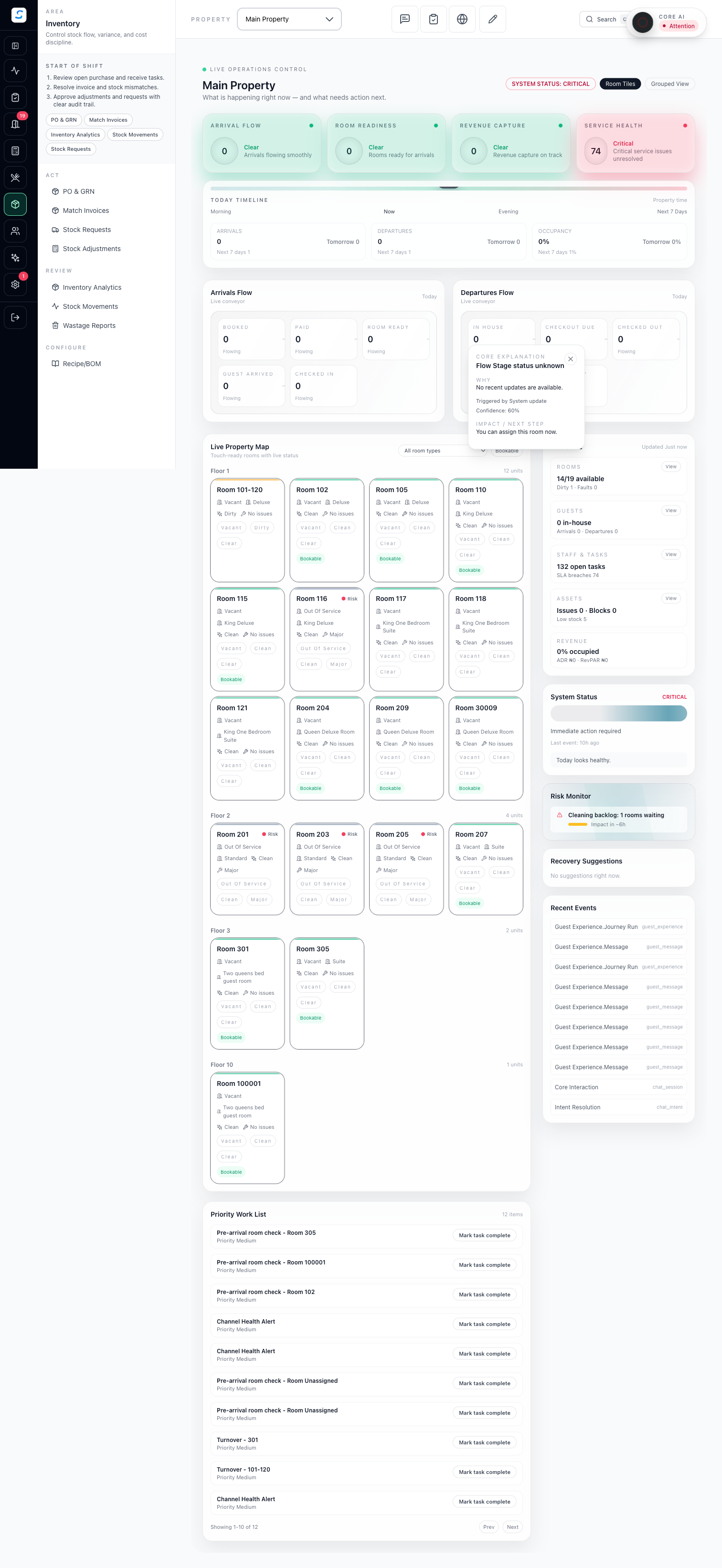
The cleaner stops waiting for text messages. The owner stops chasing updates. The manager stops guessing which unit is truly ready. The property becomes easier to run because each unit has a clear status at all times.
If you want the larger operating picture, pair this guide with the shortlet management guide and the operations governance module.
- Fewer late arrivals caused by unclear cleaning status.
- Cleaner records for restock and maintenance follow-up.
- Less dependence on constant phone calls and reminders.
Visibility also helps owners make better promises. If the next turnover is tight, the team can know it early and set the guest expectation accordingly instead of discovering the delay at the gate.
Linen and consumables need their own logic
Shortlet housekeeping is not only about cleaning. Linen counts, guest toiletries, tissue, cleaning chemicals, and replacement items all need a simple replenishment rule. If those items are not visible, the unit can look clean but still feel unfinished to the guest.
The workflow should show what was used, what was restocked, and what needs to be reordered. That keeps the turnover from becoming a guessing game and helps owners see where small leaks are building up.
| Item group | What to track | Common failure |
|---|---|---|
| Linen | Used, returned, missing, and replacement count. | Sets go missing without anyone noticing. |
| Consumables | Amenities, tissue, soap, and cleaning chemicals. | Staff restock by memory instead of by checklist. |
| Damage items | Broken fixtures, stained items, missing accessories. | Problems are reported too late to recover cost. |
What the owner should see every morning
The owner should not need a phone call to know whether the property is under control. A morning summary should show which units were cleaned, which units are still open, what issues were found, and what consumables or maintenance items need attention.
That is how housekeeping automation becomes a management tool instead of a convenience feature.
How to handle exceptions
Automation does not remove edge cases. A guest may ask for a late checkout, a cleaner may report damage, or a restock item may be missing. The workflow needs a simple way to surface those exceptions so nothing gets buried.
The right setup lets you mark a task complete, flag an issue, and move the issue to the next owner without losing the original context.
If a problem affects guest readiness, it should escalate immediately instead of waiting for the next morning summary. That is how the system protects check-in time as well as cleaning quality.
The technology stack should stay simple
You do not need a complicated stack to automate housekeeping. You need one place to create tasks, one way to assign them, and one way to confirm completion. Once that works, add more detail only where it helps the team move faster.
That simplicity matters in shortlets because the operation often runs with a small team. If the tool is too heavy, the staff will fall back to chats and the automation will never stick.
How to implement it without overcomplicating the business
Start with checkout-triggered cleaning only. Once that flow works, add issue reporting, then linen, then restock. The mistake most operators make is trying to automate the whole shortlet at once. The better move is to automate one reliable path and prove that it saves time before adding the next layer.
Give each task three things: an owner, a due time, and a completion note. That alone removes a lot of friction because the team can no longer claim that a job was “done somewhere” without evidence.
- Begin with one unit or one property cluster.
- Use the same checklist on every turnover.
- Review exceptions after each check-out cycle.
The first success should be boring: the task appears on time, the cleaner sees it, the manager sees completion, and no one has to make three follow-up calls. That is the standard worth scaling.
The KPIs that matter
Shortlet automation should be judged on speed, readiness, and exception handling. If the cleaner finishes faster but the unit is still missing linen or consumables, the process is not actually better. The useful question is whether the unit is ready on time with fewer surprises.
| Metric | What it tells you | Why it matters |
|---|---|---|
| Turnover time | How long the unit takes to become ready again. | Affects occupancy and guest arrival confidence. |
| Exception count | How often issues appear during turnover. | Shows whether the property is getting cleaner or messier operationally. |
| Owner visibility | Whether the manager sees completion without asking. | Measures how much manual chasing the system removes. |
| Rework rate | How often a unit must be revisited after initial completion. | Shows whether quality is drifting. |
When turnover time improves but rework also rises, the automation is only creating speed. The property still needs quality control.
Scale the business without scaling confusion
Shortlet automation is a control system. It helps the business stay consistent as the number of units grows and as the owner’s time gets thinner.
If you want to see how Staycore handles the workflow, start with a signup or review pricing.
FAQ
Frequently asked questions
What should be automated first in a shortlet?
Do small shortlet businesses need automation?
Can housekeeping automation reduce owner stress?
Next step
See Staycore for shortlets
Use Staycore to automate housekeeping, task routing, and property visibility across your shortlet portfolio.
Series navigation
Operations Control
A playbook for the workflows that determine whether the property feels sharp or chaotic: room status, stock, service handoffs, analytics, and staff accountability.
Previous in series
What Is a Concierge? The Modern Role in Nigerian Hotels